HOVERAir VERSA: A Pocket Gimbal Camera That Can Fly
HOVERAir VERSA switches between a handheld gimbal camera and an autonomous flying camera, with automatic tracking, orbit shots, overhead views, and 4K recording on a three-axis gimbal.
Robots, companion devices, wearables, and physical AI projects with practical requirements stated clearly.

HOVERAir VERSA switches between a handheld gimbal camera and an autonomous flying camera, with automatic tracking, orbit shots, overhead views, and 4K recording on a three-axis gimbal.

RoboFoxy is a round-faced desktop AI companion with animated expressions and voice responses. It senses touch, remembers preferences, plays radio, and can follow and celebrate your chosen sports team.

oLand combines a transparent water tank, a floating character image, and an AI companion that notices your presence, responds to touch, chats, keeps notes, and changes its miniature world with the weather and seasons.

RocXZoom combines a gimbal, a five-inch OLED display, and extreme telephoto reach. It can identify and track birds, wildlife, and other moving subjects, including in-camera recognition for hundreds of bird species.

Rokid Glasses combine binocular displays, a camera, and open speakers to show live captions, translation, navigation, and visual answers in your field of view while supporting first-person recording.

Microduck is a 25-centimeter preorder biped from Pollen Robotics, part of Hugging Face. It can walk, skate, carry objects in its beak, and be trained to perform new movements.

Researchers connected GPT-4 to a 43-axis humanoid robot so the model could write body-motion code from language, exploring physical expression without animating every movement frame by frame.

Ai-Da uses cameras in her eyes, algorithms, and a robotic arm to produce drawings and performances, presented through a humanoid body and the public identity of an artist.

AI Passport is wearable open hardware with a color screen, three buttons, a microphone, and a speaker. It can sync identity cards, load official mini-games, and use coding agents to create new ones.

Halo is an open-source AI glasses platform with a low-power Cortex-M55 and NPU, camera, bone-conduction audio, Bluetooth, local inference support, and software built on open-source ZephyrOS.

Petoi Bittle is an open quadruped kit based on the OpenCat framework. It supports C++, Python, visual programming, app control, and voice commands for robotics learning and research.

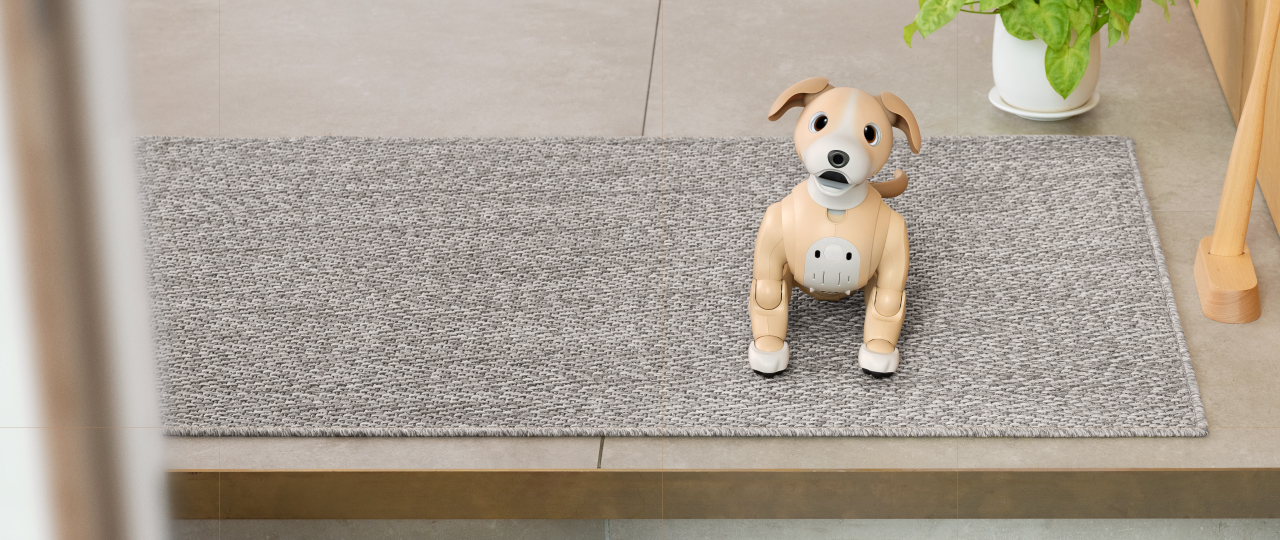
Sony’s flagship AI robot dog uses cameras and learning systems to recognize family members, develop behavior, seek affection, and return to its charger on its own.

GROOVE X’s home companion robot uses expressive OLED eyes, warmth, and multiple sensors to recognize people and build pet-like emotional relationships with a household.

Unitree’s consumer quadruped combines a 4D ultra-wide lidar system with autonomous following, mapping, programming, and AI interaction features.